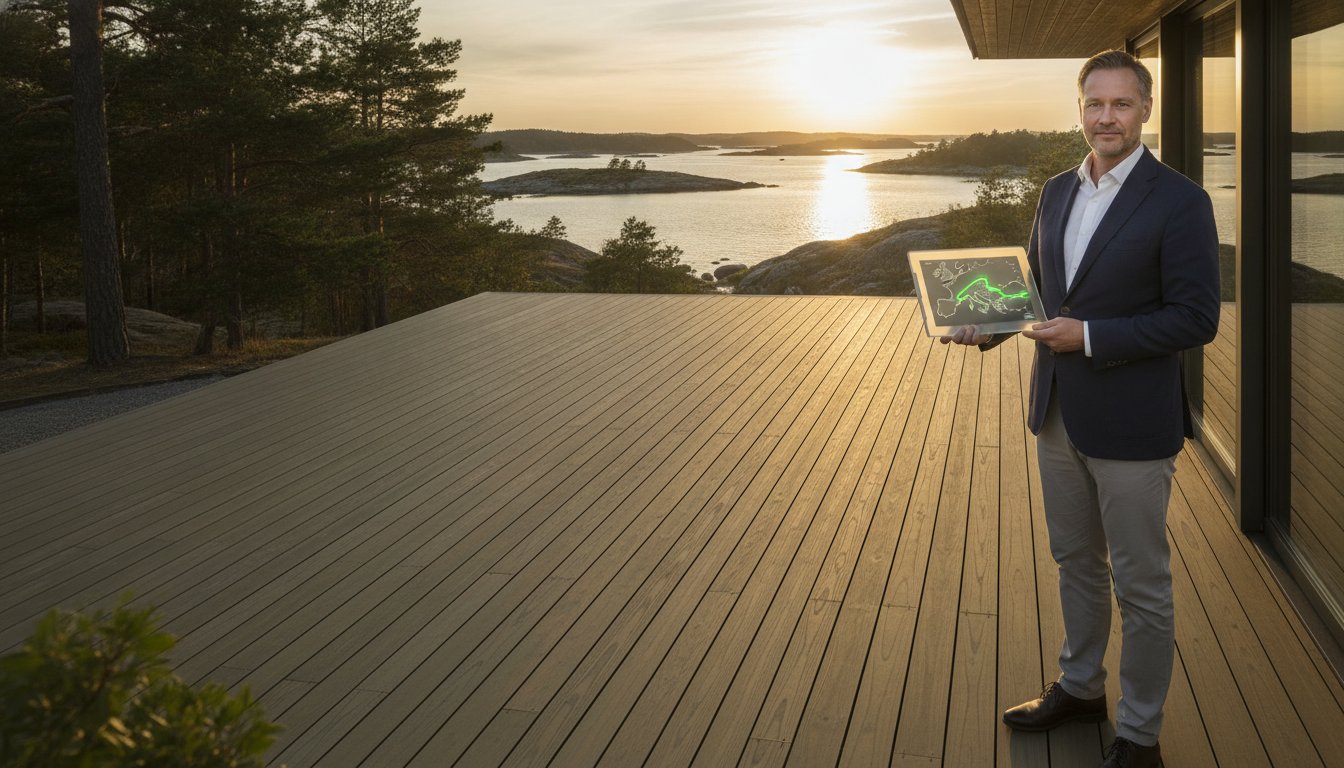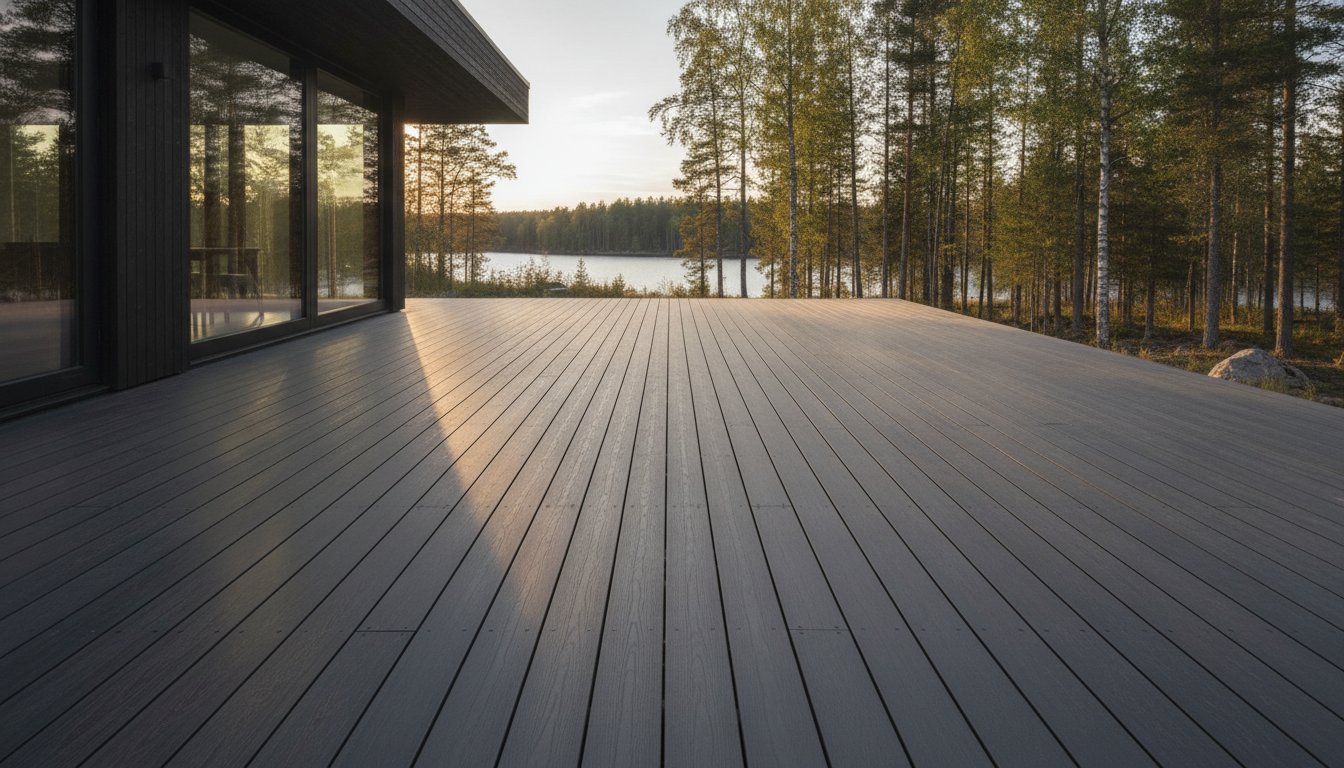




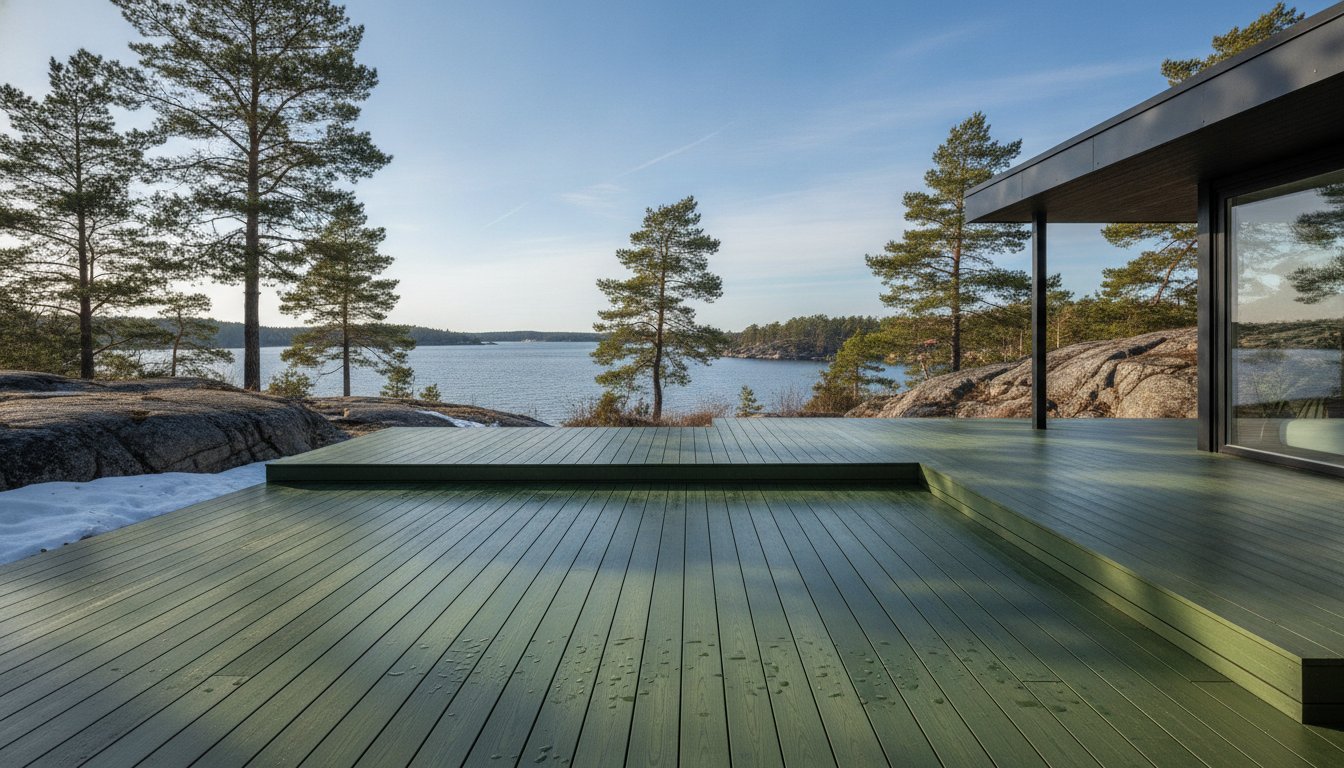
Why should a premium outdoor space be reduced to rotting timber or cracked boards after only five years of exposure? In our region, the environment acts as a relentless architect. You've likely seen traditional wood decks succumb to moisture within a decade, or standard composites shatter during the first sub-zero January. The coastal salt and heavy snow loads demand more than just aesthetic appeal. They require engineering that respects the elements while meeting the strict 2026 climate declaration standards now mandatory across the North.
We understand that a truly sustainable exterior must be a permanent one. This article explores how advanced WPC engineering optimizes Nordic climate performance to ensure a 50-year service life for your decking and cladding. We'll examine how a precise 75% hardwood fiber and 25% HDPE blend creates a low-density, high-durability solution that masters thermal expansion. You'll learn how EU-manufactured materials like Terra Tuff and the Smart System provide a maintenance-free lifestyle that aligns with the latest Danish carbon limits of 7.1kg CO2e/m2/year. We have built a path to Cradle to Cradle ownership that doesn't force a choice between regional reliability and environmental ethics.
Key Takeaways
Understand the "Freeze-Thaw-Moisture" triad and why it causes traditional timber and standard composites to fail in high-latitude environments.
Learn how a precise 75/25 ratio of hardwood fiber to HDPE enhances Nordic climate performance by eliminating the cold-weather brittleness found in PVC-based materials.
Identify high-performance solutions like Terra Tuff and Smart System that leverage EU-sourced raw materials for superior structural reliability.
Discover how to achieve a 50-year service life through proper maintenance and the use of HidLoc™ hidden fasteners to manage thermal movement.
Compare the long-term lifecycle costs of WPC versus traditional wood to justify sustainable, maintenance-free investments for commercial and private projects.
Table of Contents
What is Nordic Climate Performance for Building Materials?
The Science of Resilience: Hardwood Fiber vs. HDPE
Engineering for the North: Green Plank Manufacturing
Maintenance and Longevity in Extreme Environments
Specifying Sustainable WPC for High-Latitude Projects
What is Nordic Climate Performance for Building Materials?
In the building industry, Nordic climate performance refers to a material's capacity to maintain structural and aesthetic integrity while facing extreme UV radiation, persistent ice, and high moisture levels. It is a benchmark of endurance. While many materials look impressive in a showroom, the true test occurs during the transition from a -30°C winter night to a +30°C summer afternoon. This performance isn't just about surviving; it's about thriving over a 50-year service life without the typical degradation cycles seen in traditional timber.
The primary threat to any exterior installation is the "Freeze-Thaw-Moisture" triad. This phenomenon occurs when water penetrates the surface of a material, freezes, and expands. In porous materials like softwoods, this process shatters fibers from the inside out. Wood-Plastic Composites (WPCs) address this by encapsulating organic fibers in a protective polymer matrix. For Northern exteriors, "Thermal Stability" serves as the primary KPI. A material that expands or contracts too much during temperature swings will eventually pull away from its fasteners, leading to structural failure and safety risks.
The Nordic Environmental Challenge
Rapid temperature swings are a daily reality in high-latitude regions. These shifts put immense mechanical stress on building facades and decks. Coastal regions add another layer of complexity with salt spray, which accelerates the corrosion of metal fasteners and the rot of untreated wood. Additionally, the UV radiation at high latitudes hits at lower angles. This can be more damaging to standard plastics than the direct sun of the tropics. Without engineering focused on Nordic climate performance, materials become brittle, lose their color, and eventually crack under the weight of the next snowfall.
Performance Metrics: Beyond Aesthetics
To ensure a project meets modern building standards, we look at several technical metrics that go beyond simple visual appeal. These include:
Moisture Absorption: Rates must remain below 1% to prevent the internal ice expansion that leads to warping.
Slip Resistance: Surfaces should meet R11 or R12 standards to remain safe during wet or icy conditions.
Load-Bearing Capacity: Materials must support heavy snow accumulation without sagging, particularly in commercial infrastructure profiles.
Traditional wood rarely maintains these metrics for more than a decade. By prioritizing these engineering standards, architects can specify solutions that match the rigorous environmental expectations of Sweden, Norway, and Finland.
The Science of Resilience: Hardwood Fiber vs. HDPE
Resilience in high-latitude environments depends on the molecular marriage of components. We utilize a precise ratio of 75% hardwood fiber and 25% High-Density Polyethylene (HDPE) to ensure the material behaves like high-density timber rather than a synthetic product. The hardwood fibers act as a structural skeleton; they provide the internal rigidity necessary to resist sagging under heavy snow. Meanwhile, the HDPE serves as a protective binder that shields those fibers from the elements. This synergy is the foundation of long-term Nordic climate performance.
Many standard composites rely on PVC (Polyvinyl Chloride). While PVC is cost-effective, it becomes notoriously brittle when temperatures drop below zero. HDPE maintains its flexibility in sub-zero conditions, which prevents the surface cracking often seen in cheaper alternatives. Understanding the Thermal performance of WPC is essential for industry professionals. A material that cannot flex slightly without fracturing will never achieve the durability required for Northern winters. By choosing HDPE, we ensure the boards remain stable even as the ground shifts beneath them.
Why 75% Hardwood Fiber is the Nordic Standard
High fiber density is the secret to a premium, natural finish. It eliminates the synthetic "plastic look" that plagues lower-quality products and improves surface grip, which is vital on icy mornings. Wood fibers also have lower thermal conductivity than plastic. This means the surface stays comfortable in direct summer sun and retains less biting cold in the winter. This specific engineering choice directly supports our commitment to sustainable building materials by maximizing renewable content without sacrificing structural strength.
HDPE: The Shield Against Moisture
Moisture is the primary enemy of longevity. Our manufacturing process ensures total encapsulation, where the HDPE polymer completely surrounds every individual wood fiber. This creates a permanent barrier that prevents water from reaching the organic core. Because we use 100% EU raw materials, we maintain strict control over polymer purity. This consistency prevents the internal voids that often harbor fungal growth in high-moisture zones. To see how this science translates into a practical project, you might explore our range of EU-made composite solutions.
We also integrate specialized additives into the matrix. These components inhibit the growth of mold and mildew, even in shaded, damp locations where traditional wood would rot within years. This multi-layered defense system is what allows the material to withstand the "Freeze-Thaw-Moisture" triad mentioned previously. It's a calculated approach to engineering that prioritizes regional reliability over short-term savings.
Engineering for the North: Green Plank Manufacturing
Green Plank's manufacturing philosophy is rooted in regional reliability and ethical production. We utilize 100% EU-sourced raw materials to ensure every board meets the rigorous standards of the European market. This localized supply chain reduces our CO2 footprint while providing a level of quality control that global importers cannot match. Our engineering focus results in a low-density profile. This attribute makes the boards lighter for transport and easier for professionals to handle on-site without sacrificing structural integrity. Every manufacturing choice we make is a deliberate step toward optimizing Nordic climate performance.
A deep understanding of Building Science for a Cold Climate is fundamental to our process. We don't just manufacture; we engineer for the specific atmospheric pressures of the North. A key component of this is our HidLoc™ Hidden Fastening System. It allows for natural thermal movement while maintaining a seamless, screw-free surface. This expansion-aware installation prevents the warping and buckling that often occur when materials are rigidly pinned in environments with high temperature variance. By allowing the material to breathe, we ensure the installation remains stable for decades.
Terra Tuff: Engineered for Extreme Durability
Terra Tuff represents our most robust solution for high-traffic environments. It is specifically designed for commercial infrastructure, public piers, and saltwater-heavy coastal regions. The material withstands the abrasive nature of sand and salt while resisting the degradation caused by constant moisture exposure. We provide a 50-year service life expectation for Terra Tuff, backed by our comprehensive warranty. It's a choice for those who prioritize long-term reliability over frequent replacement cycles. It delivers the strength required for the most demanding public spaces.
Smart System: Innovation in Design and Function
The Smart System wpc composite decking offers a sophisticated approach to modern outdoor aesthetics. It utilizes a tongue and groove design that creates a tight, unified surface. This feature provides several practical advantages for Nordic climate performance:
It increases wind resistance for exposed high-latitude sites.
It prevents moisture from accumulating in the sub-structure.
It allows for a clean, architectural finish on both residential decks and commercial facades.
This versatility ensures that your outdoor space respects the natural environment while providing a maintenance-free lifestyle. Whether utilized for a private terrace or a unified building facade, the Smart System provides a high-end finish that stands up to the elements. It balances engineering precision with a grounded, eco-conscious responsibility.
Maintenance and Longevity in Extreme Environments
Achieving superior Nordic climate performance involves more than just selecting the right material; it requires understanding how that material ages without constant intervention. Traditional timber requires a grueling cycle of sanding, staining, and oiling every 12 to 24 months to prevent structural rot. Our WPC products eliminate this labor entirely. The encapsulation of hardwood fibers within an HDPE matrix creates a surface that is naturally resistant to moisture and fungal decay. This engineering choice removes the need for toxic chemical sealants, protecting both your time and the local ecosystem.
Color stability is another critical factor in high-latitude regions. The UV radiation in the North has a unique profile, often hitting surfaces at lower angles for extended periods. We utilize high-grade pigments and UV inhibitors to prevent the "bleaching" effect seen in standard plastics. While traditional wood greys and cracks under the sun, our boards maintain their aesthetic depth. This long-term visual consistency is a primary signature of our engineering confidence and manufacturing standards.
Winter Care and Ice Management
Managing ice and snow is a seasonal reality that often damages inferior decking. We recommend using plastic shovels rather than metal versions for snow removal. Metal edges can gouge the surface, while plastic glides safely over the composite. Most common de-icing salts are safe for use on our HDPE-based surfaces because the material is chemically resistant to salt-induced degradation. Proper drainage is equally critical to prevent ice buildup between boards. You can find detailed technical advice in our deck installation guide to ensure your substructure facilitates efficient water runoff during the spring thaw.
The 50-Year Lifecycle Advantage
The Total Cost of Ownership (TCO) for a commercial project reveals the true value of advanced WPC. When you factor in the cumulative cost of labor, specialized tools, and chemical preservatives required for wood, WPC becomes the more economical choice within seven to ten years. Our 50-year service life assurance is a testament to the durability of 100% EU raw materials. Beyond finances, the environmental benefit is substantial. We avoid the chemical preservatives used in timber that often leach into the soil. Our Cradle to Cradle ownership model ensures that materials remain part of a circular design, respecting nature throughout their entire lifespan. This commitment to circularity means your investment is both fiscally sound and ethically responsible.
To evaluate the long-term benefits for your specific project, view our commercial infrastructure profiles and technical specifications.
Specifying Sustainable WPC for High-Latitude Projects
Specifying materials for a unified facade requires a deep understanding of how different surfaces interact with the environment. Architects can achieve a seamless transition between horizontal and vertical planes by integrating composite wall cladding with matching decking profiles. This holistic approach creates a visual continuity that respects the minimalist aesthetic of Northern design while ensuring consistent Nordic climate performance across the entire building envelope. When surfaces are engineered from the same high-performance matrix, they expand and contract at identical rates, which prevents the structural gaps and aesthetic mismatches common in mixed-material projects.
Precision in the specification phase must extend to the fastening systems. We mandate the use of HidLoc™ fasteners for all installations because they are designed to manage the significant thermal movement typical of high-latitude projects. These fasteners provide the necessary clearance for boards to slide as temperatures shift, which eliminates the internal stresses that lead to warping or fastener "popping." For public sector projects, we recommend our Commercial Infrastructure Profiles. These profiles are engineered to meet the stringent safety and load-bearing requirements of municipal piers, park walkways, and urban plazas, providing a reliable foundation for community life.
Designing with Composite Fencing
In harsh climates, boundaries must serve as more than just visual markers. Utilizing composite fencing allows designers to create effective windbreaks that protect outdoor living spaces from biting coastal or mountain winds. Unlike timber posts that often rot at the soil line or shift during the spring thaw, WPC fence posts offer superior resistance against frost heave. The dense composition ensures the posts remain plumb even as the moisture in the ground freezes and expands. This stability ensures that the aesthetic continuity between your decking, cladding, and fencing remains intact for decades.
The Specifier’s Checklist
To ensure a project meets the highest standards of regional reliability and ethical manufacturing, professionals should adhere to a strict verification process. This checklist serves as a guide for selecting the right WPC solution:
Verify EU Raw Material Origin: Ensure the product utilizes 100% EU materials to guarantee supply chain transparency and lower transport emissions.
Ensure HidLoc™ Compatibility: Confirm the system allows for independent thermal movement to prevent long-term structural failure.
Check Moisture Absorption Ratings: Confirm the rate is below 1% to mitigate the risks of the "Freeze-Thaw-Moisture" triad.
Confirm Cradle to Cradle Compliance: Prioritize materials that support circular construction and avoid toxic preservatives.
Green Plank stands as a Responsible Innovator, providing the technical precision required for the most demanding environments. We invite you to contact our team for detailed technical specifications, CAD drawings, and project support to ensure your next installation masters the challenges of Nordic climate performance. Let us help you build a maintenance-free outdoor space that respects nature and endures for a lifetime.
Building for the Next Half-Century
Mastering the elements requires more than just high-quality materials; it demands engineering that respects the regional environment. We've explored how a precise hardwood-to-HDPE ratio provides the dimensional stability needed to survive the "Freeze-Thaw-Moisture" triad. By prioritizing products specifically engineered for -30°C to +30°C swings, you ensure your investment remains structural and beautiful regardless of the season. This commitment to Nordic climate performance is what defines a truly sustainable exterior solution.
Choosing Green Plank means moving beyond the cycle of rotting timber and seasonal maintenance. Our Cradle to Cradle Certified materials allow you to build with a clear conscience, knowing your project meets the highest ethical and engineering standards. With a 50-year commercial warranty available, you're securing a maintenance-free future for your infrastructure or home. It's time to replace temporary fixes with permanent, regional reliability.
Explore Green Plank’s High-Performance WPC Solutions to begin your journey toward a more resilient outdoor space. Your vision for a beautiful, enduring landscape is within reach. We look forward to helping you create a space that stands as a testament to quality craftsmanship and ecological responsibility.
Frequently Asked Questions
How does Nordic climate performance differ from standard material testing?
Nordic climate performance focuses on a material's ability to endure extreme thermal cycling and moisture penetration, whereas standard testing often accounts for moderate UV or static loads. In our region, materials must survive rapid shifts from -30°C to +30°C. This requires testing for internal ice expansion and the coefficient of linear thermal expansion. Our engineering ensures the material resists the internal stresses that cause standard composites to shatter in the North.
Does composite decking become slippery when it freezes?
High-quality WPC remains safer than traditional timber because it absorbs less than 1% moisture, which prevents the formation of a deep ice bond. Our boards are engineered with high-density hardwood fibers that provide a textured surface, maintaining slip resistance in wet conditions. While any surface can become slick with surface ice, the lack of internal water absorption helps the material shed ice more effectively during the spring thaw.
Can Green Plank WPC withstand heavy snow loads on a roof terrace?
Yes, Green Plank WPC is specifically engineered to support the significant weight of accumulated snow. Our commercial infrastructure profiles and Terra Tuff lines offer high load-bearing capacities that exceed standard residential requirements. This makes them ideal for roof terraces where snow loads can be substantial. The 75% hardwood fiber ratio provides the necessary internal skeleton to prevent sagging or structural fatigue under prolonged pressure from winter storms.
What happens to the colour of the decking after 10 years in the North?
Your decking will maintain its aesthetic depth and structural color after a decade of exposure. Unlike traditional wood that turns grey within months, our materials utilize high-grade pigments and UV inhibitors to resist the bleaching effect of high-latitude sun. You'll notice a slight natural mellowing during the first few weeks of exposure, after which the color remains stable for the remainder of its 50-year service life.
Is the HidLoc™ system necessary for all Nordic installations?
We consider the HidLoc™ hidden fastening system essential for all installations to manage the natural thermal movement of the boards. In regions with extreme temperature variance, boards must be allowed to expand and contract without pulling against fixed screws. This system provides the necessary clearance to prevent warping or buckling, ensuring that your Nordic climate performance remains optimal for decades without putting structural stress on the fasteners or the substructure.
How does the 75% hardwood fiber ratio affect fire safety ratings?
The dense 75/25 blend of hardwood fiber and HDPE creates a material that is naturally more flame-resistant than many softwoods. By encapsulating the wood fibers in a polymer matrix, we reduce the surface area available for ignition. Our products are manufactured to meet strict EU fire safety standards, providing a reliable solution for both residential decks and commercial facades where safety and durability are equally prioritized by architects and specifiers.
Are Green Plank materials resistant to saltwater in coastal Nordic regions?
Green Plank materials are completely resistant to saltwater, making them the premier choice for coastal piers and seaside terraces. The HDPE binder is chemically inert to salt-induced corrosion, which typically destroys metal-reinforced concrete or untreated timber over time. This resistance ensures that coastal projects maintain their structural integrity and appearance without the risk of rot or salt-bleaching, even in the most exposed maritime environments across the region.
Specify the product
Use this guide with a Green Plank specification
Technical WPC articles exist to support commercial pages — not to compete with them. Continue to Composite Decking, TerraTuff, Nordeka, or the specification downloads.